Dig deep
I lead with questions before judgment. When something breaks - a deadline, a relationship, a system - I want to understand the root before I respond to the symptom.
Engineering Manager | Staff Front-End Engineer
Platform, Architecture & Accessibility
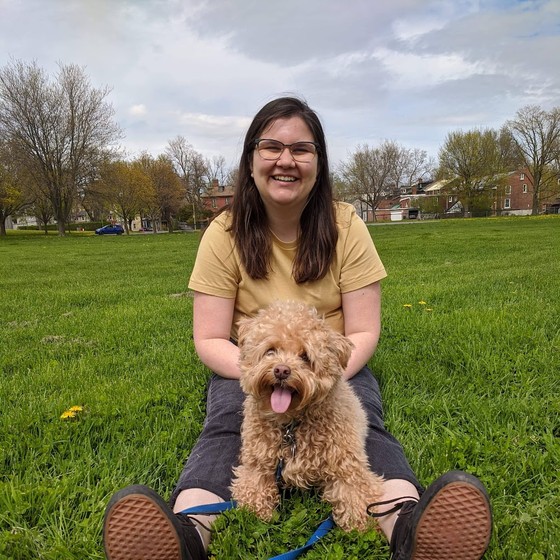
I knew I wanted to lead the moment I watched a Director debug automated tests with me.
It was my first job in tech, a QA internship, and he was someone who sat in rooms with the business one hour and sat beside an intern untangling a flaky test the next. He knew the system well enough to dig in with senior engineers when something was really broken - and he still made time for me. That balance, technical depth held alongside genuine presence with people, is what I've tried to build into every team I've led since.
A few years later, at Queen's, I asked a non-profit's CEO if I could open a Kingston chapter. She said I didn't have the experience. So I built my own path - founding Sudo Labs to teach women and gender minorities to code, from the ground up, with a team of volunteers I recruited myself.
When I got to Ratehub, I told my manager directly: I want your job. He believed me enough to start including me in interviews and hiring decisions, and in time, I had it.
I lead with questions before judgment. When something breaks - a deadline, a relationship, a system - I want to understand the root before I respond to the symptom.
I treat the people I work with as experts and as humans. That means real autonomy to solve their own problems, and space held open for the conversations that are hard to start.
I measure my own success through my team's outcomes, not my own output. In practice, that means assigning a technical lead - usually a senior or staff engineer - to every project, even when they're not the ones executing. It decentralizes ownership, gives senior engineers real leadership reps, and means the work keeps moving without me as a bottleneck.
I'm energized by systemic problems - the ones with a root cause worth finding. I'd rather build the process that prevents the fire than be praised for fighting it well.
At Ratehub, our front-end team was shipping more hotfixes than we could sustain. Rather than asking the team to simply move faster, I built a measurement framework first - setting clear SLIs and SLOs upfront so we could transform quality into something predictable and trackable.
Hotfix commits as a share of all commits across a rolling 8-week window, the methodology used for our SLI/SLO success criteria
Success was defined upfront: a hotfix rate of ≤2% across an eight-week window. First met in July 2024, and the rate stayed under 4% through September.
Unplanned shifts in priority are inevitable, but they're protectable against. I treat prioritization as a negotiation between Engineering, Product, and business stakeholders - focusing on trade-offs, scope adjustments, and honest estimation updates rather than asking the team to absorb more. By managing pushback upstream, I keep engineers focused and sprint execution stable.
As our engineering organization grew, decentralized planning became critical to keeping teams moving. I evolved our estimation process from a single‑leader model into a transparent, shared framework. By introducing sprint‑level estimation with documented assumptions and rolling them up into quarterly and t‑shirt‑sized annual roadmaps, I established a predictable planning standard adopted across the entire engineering org.
I eliminate surprises in performance reviews by treating feedback as a year‑round conversation, not an annual event. Using growth markers captured in regular 1:1s, engineers always know where they stand well before any formal review. Whether navigating a course correction or building a case for promotion, every conversation is grounded in evidence and shared expectations.
I structure bi-weekly 1:1s around engineer‑led agendas - shared living documents that track action items, ongoing feedback, and a running record of each person's growth over time. The goal is simple: a space where nothing is a surprise and nothing is off the table.
To ensure scaling teams maintained high technical and cultural standards, I built a repeatable three‑round hiring process for a QA Automation role from scratch. By implementing structured rubrics, value‑based interview guides, and a live technical assessment, I standardized the evaluation criteria across multiple engineering panels. This shifted recruitment from a subjective, instinct‑driven exercise into an objective, repeatable system, ensuring consistent talent acquisition no matter who was on the panel.
To support our engineering team and provide new managers with clear guidance, I built upon our foundational competency matrix to enhance its operational clarity. I translated high‑level rubric criteria into an accessible framework using concrete examples and clear scope at each level - defining growth from executing pre‑scoped tasks to driving cross‑functional direction - ensuring our career progression pathways scaled smoothly with the team.
A shared rich‑text serializer rendered every CMS table in two apps with no <thead>, <th> or scope. Before touching it, I audited all 55 published tables: only 4 declared header state, and the other 51 faked a header with bold text. A bold‑row heuristic would have been easy and wrong, so I honoured only real header state. The 4 got proper semantics and the other 51 shipped byte‑identical, with no content migration.
Auditing 24 CMS block types against production data produced 31 findings, and 8 turned out to be wrong, including three escalations built on a count that had queried the wrong corpus. The rule that came out of it: a count isn't evidence until the corpus is named and proven complete.
Founder & Executive Director, 2016–2020
After being told I didn't have the experience to run someone else's chapter, I started my own organization - teaching women and gender minorities to code, in Kingston, with volunteers I recruited and a curriculum we built together.
Payload CMS Consultant (Contract)
Software Development Manager
Lead Software Engineer, Front-End Infrastructure
Senior Software Engineer
Front-End Engineer II